
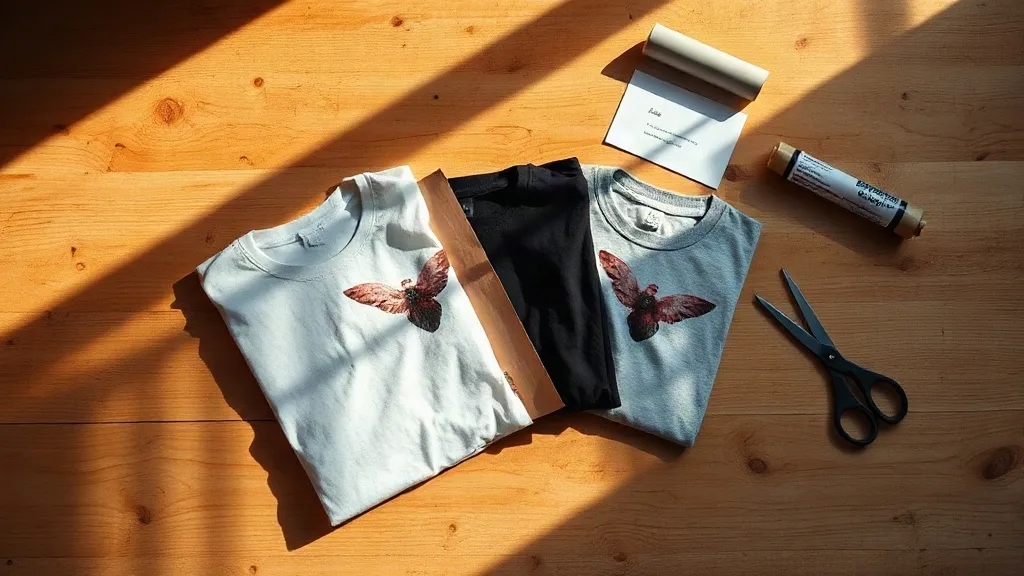
Most print shops treat samples as an afterthought. A customer asks for one, you dig a random leftover out of a drawer, drop it in an envelope, and hope for the best. Then you wonder why the follow-up email goes unanswered. Meanwhile, the shops that consistently land the big accounts are doing something different: they treat the sample pack as a deliberate piece of marketing, not a favor. If you sell dtf transfers, that small envelope in a buyer's hand can be the difference between a one-off job and a standing account.
This is not about spending more money. It is about spending a little more thought. Below is a practical approach to building a sample pack that reflects your work, answers the buyer's real questions before they ask them, and quietly moves the conversation toward a larger order.
Why the Sample Pack Deserves Real Attention
Think about how a buyer decides. A brand manager, a team merch coordinator, or a boutique owner is not comparing price sheets. They are holding a shirt and asking themselves a simple question: does this look and feel like something I would sell or wear? A photograph on a website can only go so far. A physical print on a real garment settles the argument in seconds.
That is the quiet power of dtf transfers. The print is thin, the colors are vivid, and the hand feel is soft enough that people are surprised when they touch it. But none of that lands through a screen. It lands in a hand. A thoughtful sample pack puts that experience in front of your buyer before a competitor gets the chance.
There is a practical side too. A good sample pack filters out wasted quoting time. When a buyer has already seen and felt the print, you spend less energy convincing and more time talking about quantities, blanks, and turnaround.
What Belongs in a Sample Pack That Actually Works
A sample pack is not a grab bag. Every item should earn its place by answering a question the buyer is likely to have.
Show a Range of Detail Levels
Buyers want to know how your dtf work handles the hard stuff. Include a print with fine line work, one with a dense color block, and one with a gradient or photo-style image. That trio covers most of the concerns a serious buyer brings to the table: will my details survive, will the colors be rich, and will the transitions look clean?
Use More Than One Fabric
A single white cotton tee tells a buyer very little. Add a dark garment, a poly blend, and something with a bit of texture. The point is to show that the print behaves consistently across the range of blanks they might use. If you already keep a few reliable blank styles in stock, this is a natural place to showcase them.
Include One Real-World Piece
Printed samples on flat swatches are useful, but a finished item goes further. A simple tote, a cap, or a kid's shirt shows the print in context. It tells the buyer, without a word of explanation, that you understand how transfers behave on a real product, not just on paper.
Keep the Packaging Honest
You do not need a branded box with tissue paper and a wax seal. A clean poly mailer, a simple printed card with your shop name and contact details, and a short handwritten note will do more for you than expensive packaging. Buyers remember the note. They throw away the box.
The Card That Does the Selling for You
Here is where most shops leave money on the table. The sample arrives, the buyer looks at it, and then nothing happens because there is no clear next step.
Include a short card. Not a long brochure. A card with three or four lines:
- What the print is (material, application method, recommended care).
- What quantities you handle and typical turnaround.
- A simple invitation: send us your artwork and we will quote it.
That last line matters more than you think. It turns a passive sample into an active offer. Buyers who are already interested just need a low-friction way to continue the conversation.
How to Price and Ship Samples Without Losing Money
Samples cost money, but they should not cost you your margin. A few ground rules keep the math sane.
Charge a Small, Refundable Fee
A nominal sample fee, refunded against the first order, does two things. It filters out tire-kickers who were never going to buy, and it signals that your work has value. Shops that give away everything for free often find themselves shipping samples to people who are just curious.
Keep the Pack Light
Three or four pieces are enough. A heavy pack costs more to ship and often overwhelms the buyer. The goal is clarity, not volume.
Batch Your Sample Production
Build sample packs in small runs rather than one at a time. When you are already printing a gangsheet of dtf transfers for regular orders, add a few small test prints to fill empty space. You get professional samples at almost no extra cost, and your buyers get a consistent experience every time.
When a Buyer Asks for dtf transfers near me
This is a phrase you will hear a lot, especially from local businesses who want a supplier they can talk to. It is also a moment where a sample pack can close a deal faster than any phone call. A local buyer who can hold your work in their hands and see that it is genuinely good has far less reason to keep searching. If you serve a regional market, mention your location on the card and offer a pickup option. Local buyers value the ability to stop by, and that convenience is often worth more than a few cents per print.
Following Up Without Being Annoying
The sample is only half the job. The follow-up is the other half, and it needs to feel human.
Wait about a week, then send a short message. Not a sales pitch. Something like: "Just checking that the samples arrived. Happy to answer any questions or put together a quote if you have artwork ready." That is it. No pressure, no countdown timers. If they are interested, they will reply. If not, you have lost nothing but a stamp.
If they do reply with questions, answer them directly and quickly. Speed is underrated in this business. A buyer who gets a clear answer within a few hours is far more likely to send the order your way than one who waits two days.
Turning a Sample Into a Standing Order
The real goal is not a single order. It is a relationship where the buyer comes back every season without shopping around. That happens when the sample was accurate, the first order arrived on time, and the print held up after a few washes.
So treat the sample as a promise. If your sample shows a print that survives twenty washes, your production run needs to match it. Consistency is what turns a curious buyer into a loyal one, and it is the single most valuable thing your shop can build over time.
Frequently Asked Questions
How many pieces should a sample pack include?
Three to four pieces is the sweet spot. Include one detailed print, one bold color block, and one real-world finished item. That covers the main questions a buyer has without overwhelming them or driving up your shipping costs.
Should I charge for samples?
A small fee that is refunded against the first order is usually the best approach. It filters out casual inquiries and signals that your work has value, while still making it easy for serious buyers to move forward.
What is the best way to follow up after sending a sample?
Wait about a week, then send a short, friendly message asking whether the samples arrived and offering to quote any artwork they have ready. Keep it brief and pressure-free. A quick, clear reply to their questions matters more than the follow-up itself.
Can a sample pack help with local customers?
Yes. Local buyers often search for dtf transfers near me because they want a supplier they can visit or call. A sample pack combined with a pickup option gives them a reason to choose you over an online-only competitor.
Will my production prints match the samples?
They should, and that consistency is the whole point. Build your samples from the same process and materials you use for production orders. If the sample survives repeated washing, the production run needs to match that standard every time.