
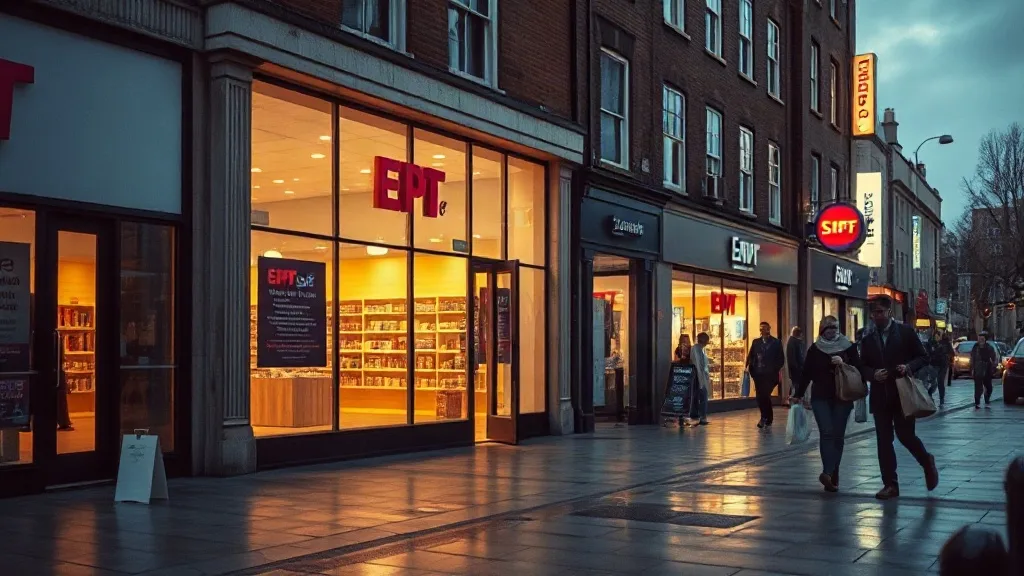
For a chain whose entire pitch is built on the promise that nothing costs much, Poundland has found itself in an uncomfortably expensive situation. The discount retailer, which has been inching toward administration, is now being given extra room to find a buyer, according to reporting on the situation. In plain terms: the clock has not quite run out, but it is ticking loudly, and the next few weeks could decide whether one of Britain's most recognisable bargain brands keeps its doors open.
That a retailer synonymous with the pound coin is fighting for its future is a story that lands differently depending on who you are. If you are a shopper who nips in for batteries, wrapping paper and a bag of sweets, it is a mild inconvenience. If you are one of the thousands of people who work in its stores and distribution network, it is something far heavier. And if you are watching the wider discount sector, it is a signal worth reading carefully.
What is actually happening with Poundland?
The short version is that Poundland has been edging toward administration, the process that kicks in when a business can no longer meet its obligations and needs protection from creditors while its future is sorted out. Rather than pulling the plug immediately, the company is being given more time to find someone willing to take it on. That is the last-minute rescue deal at the centre of the story: a buyer stepping in before the situation hardens into a full collapse.
It is worth being precise about what this does and does not mean. Extra time is not a guarantee of survival. It is a window, and windows close. A rescue deal could take several shapes. An existing investor might put more money in. A rival retailer might see value in the stores, the brand or the customer base. A private equity buyer might decide the assets are worth more than the liabilities. Each of those paths leads to a different outcome for the people who shop and work there.
Why the timing matters so much
Retail rescues are rarely calm, orderly affairs. They happen against deadlines, with landlords, suppliers and lenders all watching the same calendar. The longer a business sits in limbo, the more nervous suppliers become, and nervous suppliers can start demanding tighter payment terms or holding back stock. That can create a spiral: empty shelves lead to fewer customers, fewer customers lead to weaker sales, and weaker sales make a rescue less attractive to any buyer doing their sums.
So the extra time is genuinely useful, but it is not free. Every additional week is a week in which confidence has to be actively maintained, from the shop floor to the boardroom.
Why a discount chain struggling is a bigger story than it looks
Poundland occupies a specific place in the British retail landscape. It built its identity on fixed, low price points and a slightly chaotic treasure-hunt shopping experience, where you go in for one thing and come out with five you did not know you needed. That model depends on high footfall, efficient supply chains and, crucially, a customer base that feels the pinch and responds by trading down.
You might assume that a cost-of-living squeeze would be good news for a bargain retailer. In practice, the picture is messier. Discount chains face the same rising costs as everyone else: energy, wages, rent, transport and the price of the goods themselves. When your entire proposition is built on keeping prices low, there is very little cushion to absorb those increases. The discount retail sector has been squeezed from both directions, by costs going up and by customers who are themselves watching every penny.
There is also the competitive pressure. Supermarkets have expanded their own budget ranges, online marketplaces offer near-endless cheap options, and other value chains have fought hard for the same shoppers. Poundland's edge was never just price. It was convenience and the small thrill of a bargain. Protecting that edge while managing a difficult balance sheet is the tightrope every discount retailer is walking right now.
The high street angle
Then there is the physical footprint. Poundland stores are scattered across high streets and retail parks, often in towns where the local shopping centre has already lost several familiar names. A retailer of this size closing en masse would leave gaps that are not easily filled. Empty units tend to stay empty, and the surrounding shops feel the drop in footfall. For smaller towns, the loss of an anchor tenant can change the character of a shopping area for years.
This is why the story is being watched beyond the company's own accounts. A rescue deal is not just a corporate transaction. It is a decision about how many high streets keep a familiar name above a door.
What a rescue deal could realistically look like
Rescues in retail tend to follow a handful of familiar patterns, and it helps to understand them without pretending to know which one will happen here.
- A trade buyer: another retailer or retail group takes on the business, potentially keeping the brand and a large number of stores while closing the weakest ones.
- A financial buyer: an investor or private equity firm sees underlying value and restructures the business, often with a focus on cutting costs and renegotiating leases.
- A partial rescue: some stores, the brand or parts of the operation are sold while other elements are wound down. This is often the least tidy outcome and the hardest for staff to predict.
- No deal: the window closes and administration proceeds, with the business either sold in pieces or closed.
Notice that even the successful versions usually involve change. A rescue is rarely a case of everything carrying on exactly as before. Store closures, lease renegotiations and changes to staffing are common features of retail restructurings, and shoppers should expect that any deal will come with a plan attached.
What it means if you shop there
For customers, the practical advice is simple and unglamorous. Keep shopping if you find value, but do not rely on a single retailer for anything essential. Gift cards and vouchers are worth using rather than saving, since their status can become complicated if a business enters administration. Returns and refunds are generally handled normally while stores are trading, but policies can shift if ownership changes.
It is also worth resisting the urge to read too much into a single headline. Retail businesses in talks with buyers can look unstable one week and settled the next. The most useful signal is not rumour but confirmed news about a deal, a buyer or a formal administration filing.
What it means if you work there
For employees, the uncertainty is the hardest part, and it deserves to be acknowledged plainly. When a business is seeking a rescue, staff often hear conflicting things and have little control over the outcome. Practical steps help: keep copies of contracts and payslips, stay informed through official channels rather than speculation, and know that in an administration process employees have legal protections and are typically treated as priority creditors for certain payments. Unions and advice services can provide guidance specific to individual circumstances.
The bigger question for British retail
Step back and the Poundland story becomes a question about what the discount model looks like in the years ahead. The formula of low prices, broad ranges and convenient locations worked brilliantly when costs were stable and shoppers were predictable. Neither condition holds at the moment. The retailers that survive will be the ones that can keep their prices sharp without letting their cost base run away from them, and that can hold on to customer loyalty when cheaper alternatives are a click away.
Whether Poundland is part of that future depends on the next few weeks. A last-minute rescue deal would buy time, but it would also buy a set of difficult decisions. For now, the story is one of a familiar brand asking for a little more room, and a market deciding whether it is worth giving.
Frequently asked questions
Is Poundland closing down?
Not confirmed. The company has been edging toward administration and is reportedly being given more time to find a buyer. Stores continue to trade while that process plays out, but the situation is fluid and the outcome depends on whether a rescue deal is agreed.
What does administration actually mean for a retailer?
Administration is a legal process that protects a struggling business from creditors while its future is decided. An administrator takes control and looks for the best outcome, which could be a sale of the business, a sale of parts of it, or a wind-down. Trading can continue during this period.
Should I spend Poundland gift cards now?
It is generally sensible to use vouchers and gift cards sooner rather than later when a retailer's future is uncertain. Their treatment can become more complicated if a business enters administration, and using them while stores are trading normally avoids that risk.
Why would a bargain retailer struggle when prices are rising?
Because rising costs hit discounters hard too. Energy, wages, rent and the cost of goods all increase, while the low-price promise leaves little room to pass those costs on. Add intense competition from supermarkets and online sellers, and the squeeze becomes difficult to absorb.