
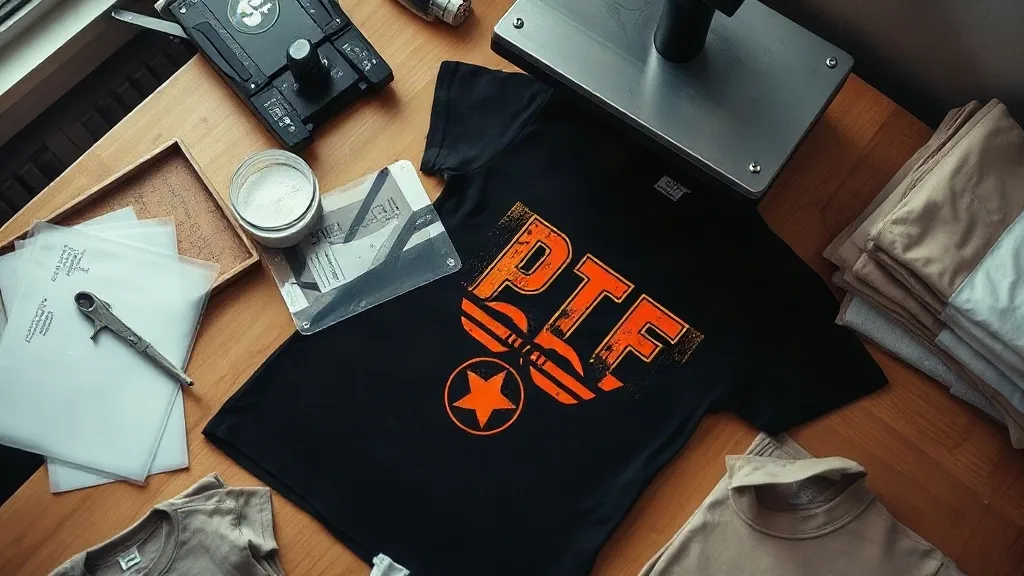
A heat press, a stack of cotton tees, and a folder of designs. That is how most small print operations start, and it is also where many of them stall. The gap between a decent print and a professional one rarely comes down to talent. It comes down to the transfer itself and how well you understand it. This guide is for the person running a two-person shop, a side business out of a garage, or a market stall that needs a hundred shirts by Friday. It walks through what dtf transfers actually are, where they fail, and how to build a repeatable process around them.
What DTF Actually Is, Without the Sales Pitch
Direct-to-film printing works differently from vinyl or screen printing, and that difference matters when you are choosing a method for a specific job. A printer lays pigment ink onto a special film, then applies a hot-melt adhesive powder over the wet ink. The powder melts into the ink, cures, and leaves you with a flexible, rubbery layer that can be pressed onto fabric with heat.
The practical consequence is that dtf is not fussy about fabric type. Cotton, poly blends, canvas totes, even the polyester jerseys that bleed with other methods. You do not need to stock different transfer types for different garments, which is a huge deal if you run a small catalogue and cannot buy in bulk across five product lines.
Why the Powder Step Is the Whole Game
Most people learning about dtf focus on the printer. The powder is where quality actually lives. Too little adhesive and the print cracks after a few washes. Too much and you get a stiff, plastic-feeling patch that customers notice immediately. The curing stage, where the powder is melted until it looks glossy and wet, is where a good transfer separates from a mediocre one. If you buy transfers pre-made, this is the step you are paying someone else to get right.
File Preparation That Saves You Money
Every wasted transfer is money. The most common cause of waste is not the press or the film, it is the file. A few habits will cut your failure rate fast.
- Transparent background, always. A white box around a logo means a white box gets pressed onto the shirt. Flatten your artwork onto transparency, not white.
- Check your line weights. Very thin lines under a point or so can break apart during pressing. If a detail matters, thicken it slightly before output.
- Mirror the artwork. The transfer is pressed face down, so the film must carry a mirrored image. Forget this once and you will never forget it again.
- Leave a bleed margin. Give yourself a few millimetres of colour past the trim line so cutting errors do not show up as white edges on the garment.
- Keep a test swatch file. A small sheet with your thinnest lines, smallest text, and a colour gradient is worth more than any tutorial. Press it once per new batch of film.
If you are ordering transfers rather than producing them yourself, these same checks apply before you send the file. A supplier will print exactly what you upload, including the mistakes.
Press Settings: Where Most Beginners Lose Consistency
Temperature, pressure, and time are the three variables, and the trap is changing more than one at a time. When a print fails, people crank the temperature and add time and press harder, then wonder why the result is worse.
A sensible starting point for most DTF work is a medium-firm press with a temperature in the region of 150 to 160 degrees Celsius for the main press, followed by a short second press after peeling the film. But treat that as a starting point, not gospel. Your press may run hot or cold, and cheap presses often do. An infrared thermometer on the platen will tell you more about your machine than the dial ever will.
The Peel Is a Decision, Not a Step
Cold peel and hot peel produce different results, and the film you buy dictates which one you should use. Peeling too early on a film designed for cold peel pulls the adhesive away from the fabric and leaves a patchy, dull finish. Peeling too late on a hot-peel film can leave residue. Ask your supplier which peel their film wants, then be consistent. A second short press with a cover sheet after peeling locks the print in and smooths the surface.
Fabric Behaviour You Should Expect
One of the selling points of dtf is fabric versatility, but versatility is not the same as uniformity. The same transfer will look different on a heavyweight cotton tee than on a lightweight poly performance shirt, and knowing why helps you set expectations with customers.
On cotton, the ink sits slightly into the weave and the result feels soft and matte. On smooth polyester, the print can appear glossier and the adhesive bonds differently. On coarse canvas, fine detail gets swallowed by the texture. If a customer wants a very fine line illustration on a rough tote, steering them toward a simpler design is better service than printing something that will disappoint.
Stretch fabrics deserve a mention too. A print that is fine on a rigid garment can crack on a stretchy one if the design has large solid blocks of ink with hard edges. Rounded shapes and slightly softer edges survive stretching much better.
Finding a Supplier You Can Actually Rely On
Searching for dtf transfers near me usually happens for one of two reasons. Either you need a fast turnaround for a deadline, or you have been burned by a supplier whose colours drifted between orders. Both are legitimate, and both are solved by asking the right questions before you commit.
Ask about turnaround in working days, not vague promises. Ask whether they will send a sample press before a large order. Ask what happens if a batch arrives with the powder unevenly cured. A supplier who answers these clearly is worth paying slightly more for. A supplier who dodges them will cost you more in wasted blanks than you save on the transfer.
Building a Backup Plan
Small shops get caught out when a single supplier goes quiet during a busy period. Keep a second source on file, even if you rarely use it. Keep a small stock of common sizes for your best-selling designs so a late delivery does not stop production entirely. This is dull admin, but it is the difference between a business that survives a busy month and one that refunds orders.
Pricing and Positioning for Small Shops
Transfers let you offer short runs that screen printing cannot touch economically. A single shirt with a full-colour design is entirely viable, and that changes what you can sell. Instead of chasing bulk orders, you can build a business around personalisation, small team kits, event merch, and one-off gifts.
The pricing mistake is charging screen-print rates for DTF work and then absorbing the transfer cost. Price the garment, the transfer, your labour, and your failure rate. That last one is not pessimism, it is accounting. If one in twenty prints needs redoing, that cost belongs in the price, not in your margin.
Care Instructions Worth Printing on a Card
Wash durability is the number one complaint customers bring back. Most of it is preventable with clear instructions. Wash inside out, cold water, no fabric softener, no tumble drying on high heat, and no ironing directly on the print. A small card in every order costs almost nothing and cuts returns dramatically.
If you want to test a batch before selling it, press a sample, wash it five times on a normal cycle, and look at it honestly. That test tells you more than any spec sheet.
Frequently Asked Questions
Can I press DTF transfers with a home iron?
You can, but results will be inconsistent. A home iron does not deliver even pressure or stable temperature across the whole design, so edges tend to lift and the finish looks patchy. For occasional single items it may be acceptable. For anything you sell, a proper heat press is the better investment.
How long do DTF prints last on a shirt?
With correct pressing and proper washing, most well-made transfers hold up for dozens of wash cycles without noticeable cracking or fading. Longevity depends heavily on the adhesive cure and the fabric. Prints on stretchy garments and prints with large solid ink areas tend to show wear sooner than small designs on stable cotton.
Do DTF transfers work on dark and light shirts equally well?
Yes, and that is one of the method's main advantages. Because a white ink layer sits under the colour, the design reads clearly on black, navy, and other dark garments without the colour shifting. You do not need separate transfer types for light and dark stock.
What is the most common reason a DTF transfer fails?
In practice, uneven pressure and incorrect peel timing cause more failures than anything else. A press with a worn platen or a warped upper plate will produce weak spots that only show up after washing. Check your press with a pressure test sheet before blaming the film.
Should I buy pre-made transfers or print my own?
If your volume is low or your designs change often, buying pre-made transfers keeps your overhead down and removes the curing variable from your process. Printing in-house makes sense once you have steady volume and can justify the equipment, the powder handling, and the space. Many small shops start by buying and move to in-house only when the numbers clearly support it.